 Image 1 of 1
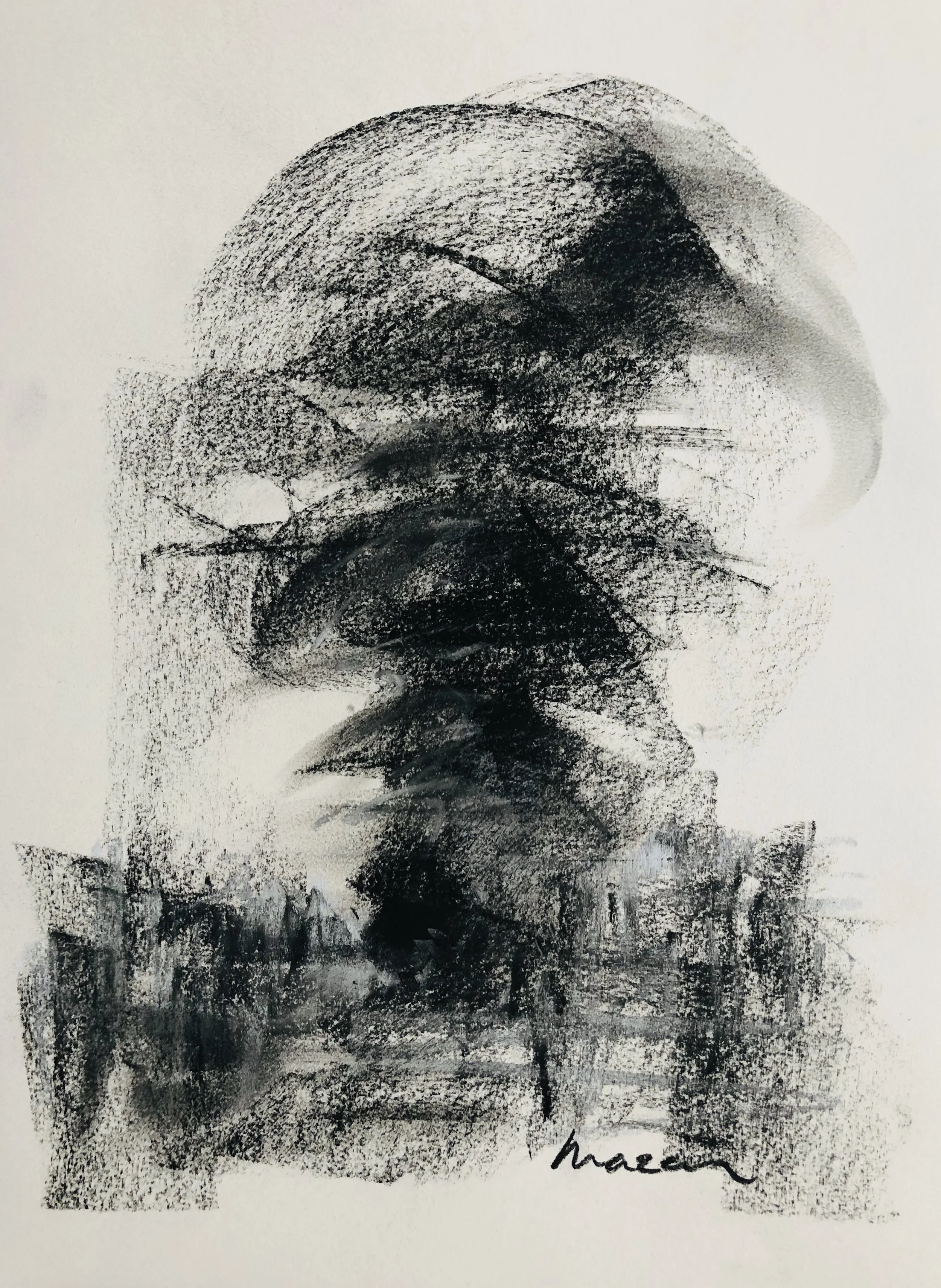
2020 – Charcoal on paper (11× 14in)
This piece emerges from a deeply personal memory. Written on August 16th, 2020 right after the Beirut Port explosion on August 4th 2020.
“My son turned six a few days ago, and I found myself returning to my own early days at that age, some of them remembered with a clarity that feels as immediate as something from an hour ago, and with an impact that has never really left me. I cannot help but compare what I lived through then with what he may be absorbing now, growing up within the long uncertainty of a pandemic with no clear end in sight.
At six, I was beginning to understand that I had been born into a country trying to tear itself apart. I remember the sound of war, the smell of war, and the fear held in a small body that did not yet have the language for it. I grew up in Lebanon during some of the most violent years of the civil war, moving between Beirut and Mar Moussa, a small village on Mount Lebanon, fleeing from one place to the other depending on where the bombing was heaviest. What remains with me most is the whistling sound of shelling. I learned very early that at the end of that whistle came a louder sound, and that the suspended moment between the two held an unbearable uncertainty: either we would be hit, or we would not. It was a kind of Russian roulette stretched over days, months and years…
Drawing became the way I carried this experience. I constantly drew the war scenes I witnessed, along with the scenes I imagined unfolding beyond our places of hiding. In that way, drawing became part of my life, not only as expression, but as a means of passing through trauma and surviving it.
The events of August 4 in Beirut inevitably brought this past back to the surface. They also revealed to me how little has changed in 34 years: Lebanon remains a country whose people long to live in peace, while its political class continues to sell it for profit.
No child should have to endure what I experienced in the 1980s and 1990s, nor what Beirut continues to endure today.
Lebanon belongs to its people. Beirut belongs to the world.”
~Mazen
2020 – Charcoal on paper (11× 14in)
This piece emerges from a deeply personal memory. Written on August 16th, 2020 right after the Beirut Port explosion on August 4th 2020.
“My son turned six a few days ago, and I found myself returning to my own early days at that age, some of them remembered with a clarity that feels as immediate as something from an hour ago, and with an impact that has never really left me. I cannot help but compare what I lived through then with what he may be absorbing now, growing up within the long uncertainty of a pandemic with no clear end in sight.
At six, I was beginning to understand that I had been born into a country trying to tear itself apart. I remember the sound of war, the smell of war, and the fear held in a small body that did not yet have the language for it. I grew up in Lebanon during some of the most violent years of the civil war, moving between Beirut and Mar Moussa, a small village on Mount Lebanon, fleeing from one place to the other depending on where the bombing was heaviest. What remains with me most is the whistling sound of shelling. I learned very early that at the end of that whistle came a louder sound, and that the suspended moment between the two held an unbearable uncertainty: either we would be hit, or we would not. It was a kind of Russian roulette stretched over days, months and years…
Drawing became the way I carried this experience. I constantly drew the war scenes I witnessed, along with the scenes I imagined unfolding beyond our places of hiding. In that way, drawing became part of my life, not only as expression, but as a means of passing through trauma and surviving it.
The events of August 4 in Beirut inevitably brought this past back to the surface. They also revealed to me how little has changed in 34 years: Lebanon remains a country whose people long to live in peace, while its political class continues to sell it for profit.
No child should have to endure what I experienced in the 1980s and 1990s, nor what Beirut continues to endure today.
Lebanon belongs to its people. Beirut belongs to the world.”
~Mazen